
Roofing guide
How long does a roof last in New Jersey?
Most architectural shingle roofs in North Jersey last about 20 to 30 years. Rubber, TPO and PVC flat roofs commonly last 20 to 30 years too, modified bitumen 15 to 20 years or more, and slate is a 100-year roof. This guide covers what moves a roof up or down its range, the signs it is near the end, and how to tell whether yours needs a repair or a new roof.
- Registered & insured NJ HIC Reg. #13VH12667100
- Family-owned in Paramus, NJ
- Free written estimates, no obligation
How long does a roof last? The short answer by roof type
These are typical lives for the roofs we work on across North Jersey: shingles installed correctly over a ventilated attic, and flat roofs with correct installation and drainage.
| Roof type | Typical life |
|---|---|
| Architectural asphalt shingles | About 20 to 30 years |
| EPDM rubber (flat roof) | 20 to 30 years, often longer |
| TPO (flat roof) | 20 to 30 years |
| PVC (flat roof) | 20 to 30 years |
| Modified bitumen (flat roof) | 15 to 20 years or more |
| Hard slate (Vermont, New York, Virginia) | 125 years or more |
| Softer Pennsylvania slate | 60 years and up |
The slate figures come from the National Park Service. A range is not an expiry date: the installation, the attic, the trees and the winters move a roof up or down it.
How long do architectural shingles last in North Jersey?
About 20 to 30 years, when the roof is installed correctly and the attic is ventilated. Architectural shingles have two bonded layers, so they are thicker than old three-tab shingles and carry higher wind ratings. They are the standard choice today, and the shingle we install on roof replacements, from Owens Corning, GAF or another brand you prefer.
Installation quality matters more than the logo on the wrapper, and so does the house underneath. Many older Cape Cods, ranches and split-levels here have low attics with little ventilation, and many older colonials and Tudors have a second or third layer of shingles over old plank decking. A second layer traps heat and shortens the life of the new shingles, which is why we tear off to the deck.
How long does a 30-year roof really last?
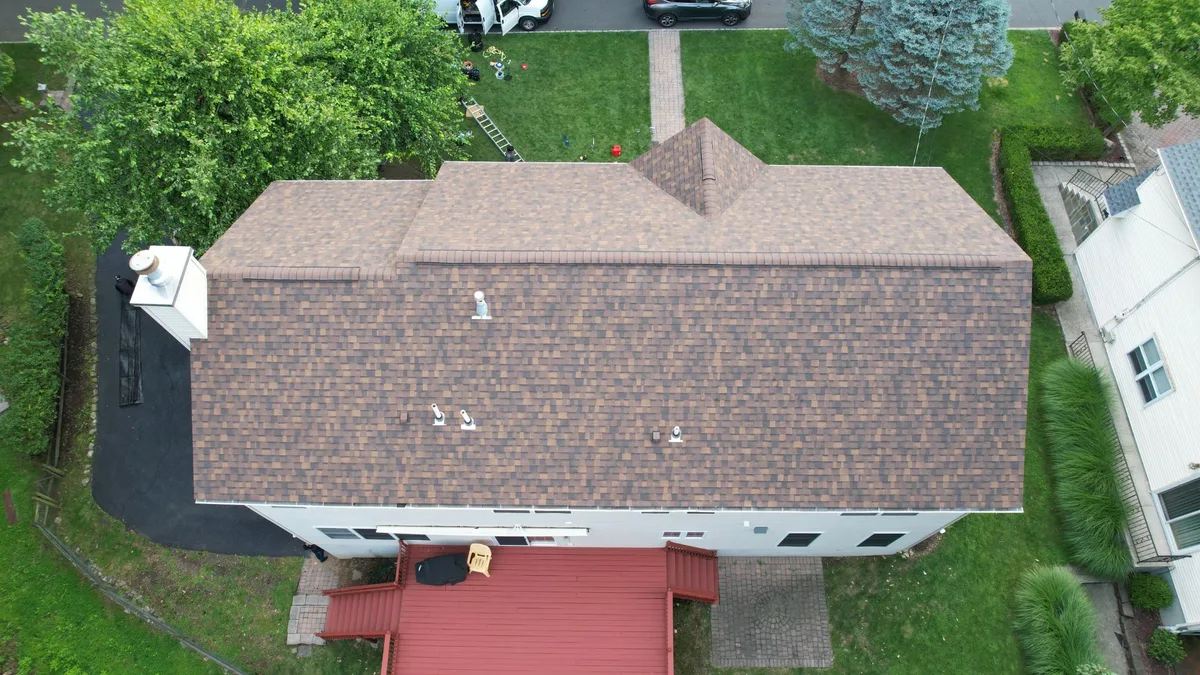
Architectural shingles in North Jersey last about 20 to 30 years, whatever the label says. Where your roof lands in that range depends on the installation, the attic ventilation and the shade.
On a ProTech roof replacement, the coverage comes in two parts. ProTech covers the workmanship for a minimum of 15 years, longer depending on the roofing product. The manufacturer covers the shingles under its limited warranty. Your written proposal names the exact product, color and warranty terms.
What shortens or extends the life of a roof here
Two roofs of the same age can wear very differently. These are the main reasons.
- The installation. A roof that lasts is built from the deck up: solid decking, drip edge, synthetic underlayment, a starter strip, new step flashing and pipe boots, and shingles nailed to the manufacturer’s pattern. We do not reuse worn-out flashing.
- Attic ventilation. A hot, damp attic bakes shingles from below. We check the intake at the soffits and the exhaust at the ridge on every roof replacement and correct it as part of the roof.
- Trees and shade. Mature trees keep a roof shaded and damp, and heavy shade and moss shorten the life of shingles. Dark streaks are usually algae, mostly a cosmetic problem. On lots with heavy tree cover, ask about algae-resistant or impact-rated shingles.
- Winters and wind. How many winters of ice a roof has seen moves its life up or down, and wind breaks the seal on shingles and tears them off.
- The smaller parts. The rubber collar of a pipe boot cracks after 10 to 15 years in the sun, skylight makers put the service life of a good unit at roughly 20 to 30 years, and aluminum gutters last 20 years or more when fastened well and kept clean. A roof can leak at a pipe boot or a skylight long before its shingles are worn out, and the fix is usually a repair.
How long does a flat roof last on a house? EPDM, TPO and modified bitumen
Rear additions, porches, dormers and garages on North Jersey homes often have a low-slope roof that needs a membrane instead of shingles. With correct installation and drainage, EPDM, TPO and PVC commonly last 20 to 30 years, and EPDM often longer. A two-ply modified bitumen roof with good drainage typically lasts 15 to 20 years or more.
- EPDM rubber stays flexible through cold winters, and many EPDM roofs from the 1980s are still working. Older ones were seamed with liquid adhesive, which breaks down over 15 to 20 years, and new cover tape over the cleaned laps can add years.
- TPO, a white sheet with heat-welded seams, suits larger flat sections on houses. Thicker membranes, good drainage and regular maintenance push it toward the top of its range.
- Modified bitumen goes down in two or more plies and is tough underfoot, which is why it is popular on porch roofs and balconies. Granule loss, blisters and open laps are the signs of age.
Ponding water, foot traffic and neglected drains shorten any flat roof, and on a house most leaks start at the tie-in, where the flat section meets a shingled slope or a wall. Our EPDM flat roof replacement in Washington Township shows one home job from tear-off to finished roof.
A low section shingled on a slope too flat for shingles is a different problem: new shingles do not stop those leaks. Our guide to porch and addition roofs that keep leaking explains why.

How long should a slate roof last?
Far longer than shingles or a flat roof. Slate is a 100-year roof. According to the National Park Service, hard slates from Vermont, New York and Virginia commonly last 125 years or more, and softer Pennsylvania slates 60 years and up. Many older colonials, Tudors and Victorians in towns like Ridgewood and Glen Rock still have their original slate.
The stone is rarely what fails. Flashing in valleys, around chimneys and at walls wears out long before the slate does, old iron nails rust through and let slates slide out, and slate cracks when people walk on it. Most of that is repairable with matching slates, new copper flashing and new fasteners. A slate roof is usually worth replacing only when the stone itself has gone soft or flaky and so many slates are broken, cracked or missing that repairs stop making sense. The National Park Service puts that point at about one slate in five on a roof or a slope. If someone says the whole slate roof has to go, get a second opinion first.
Is a 20-year-old roof too old? Signs to have your roof checked
Not by age alone. Most architectural shingle roofs here last about 20 to 30 years. A 20-year-old roof sits at the low end of that range: some have years left, and some are worn out. A roof 20 years old or more, or one whose age you do not know, calls for a free inspection, not an automatic replacement. Most of these signs can be seen from the ground or the attic.
- Water stains on a ceiling or down a wall, even if they dried up
- Shingles that are curled, cracked, missing or bald where the granules have worn off
- Piles of granules in the gutters or at the bottom of downspouts
- Rusted or lifted flashing around the chimney, skylights or walls
- Daylight showing through the roof boards in the attic, or sagging between rafters
- Leaks in more than one area, or the same leak coming back
- Two layers of shingles already on the house
One of these is a reason to have the roof checked. The next section shows which ones usually call for a repair and which usually mean a new roof. Please stay off the roof itself.
Repair or replace, and what a free inspection with photos tells you
It depends on how much of the roof is worn.
- Usually a repair. One leak on a roof under 15 years old, storm damage to a few shingles while the shingles around them still lie flat, or a leak at the flashing around a chimney, skylight or wall, which new flashing fixes whatever the age of the shingles. See roof repair.
- Usually a replacement. Leaks in several places on a roof 20 or more years old, shingles curling, cracking or bald across whole slopes, or a soft or sagging deck. See roof replacement.
- Flat roofs. Targeted repairs to seams, flashing and punctures work well while the membrane is in fair shape and the insulation below is dry. See flat roofing.
Every permanent repair comes with a minimum 2-year workmanship warranty on the repaired area, in writing, and some repairs get a longer warranty, depending on the age and condition of the roof. If the rest of the roof is near the end of its life, we tell you before you spend money on a repair. For more on that choice, see our guide to deciding between a new roof and a repair.
A free inspection shows which case you are in. We check the roof surface, flashing, vents, gutters and attic, photograph what we find, show you the photos and tell you what we would do if it were our house. Your written estimate lists the scope and the materials by name, and explains both options when both make sense. If water is coming in now, see emergency roof repair.
Questions
How long roofs last: common questions
How long does a roof last in New Jersey?
Most architectural shingle roofs in North Jersey last about 20 to 30 years. With correct installation and drainage, EPDM, TPO and PVC flat roofs commonly last 20 to 30 years as well, and modified bitumen 15 to 20 years or more. Slate lasts far longer when its flashing and nails are kept up. Attic ventilation, tree cover and the quality of the installation decide where your roof lands in its range.
How long does a 30-year roof really last?
Whatever the label says, architectural shingles in North Jersey last about 20 to 30 years when they are installed the way the manufacturer requires, over a well-ventilated attic. Poor ventilation, heavy shade and moss, and foot traffic shorten that. We name the exact product, color and warranty in your written proposal.
Should I replace a 20-year-old roof?
Not because of its age alone. At 20 years an architectural shingle roof is at the low end of its usual range here, so some have years left and some are worn out. Replacement makes sense once the shingles on whole slopes are curling, cracking or bald, leaks show up in several places, or the deck is soft. One leak or a few lost shingles can usually be repaired. A free inspection with photos shows which case you are in.
How long does a rubber roof last?
With correct installation and drainage, an EPDM rubber roof commonly lasts 20 to 30 years and often longer, and many EPDM roofs from the 1980s are still working. Ponding water and foot traffic shorten its life, and so do tar patches, because roof cement and tar attack rubber. On older rubber roofs, seams glued with liquid adhesive break down over 15 to 20 years, and cover tape over the cleaned laps can add years.
How do you know a roof needs to be replaced?
The usual signs are leaks in more than one area or the same leak coming back even after a repair at its source, shingles curling, cracking or bald across whole slopes, a soft or sagging deck, piles of granules in the gutters, or two layers of shingles already on the house. A single leak or failed flashing usually calls for a repair. Stay off the roof and ask for a free inspection with photos.
Not sure how much life your roof has left?
If your roof is 20 years old or more, or you do not know its age, call us or ask for a free inspection. We will show you photos of what we find and give you a written estimate.