
Roofing guide
Roof still leaking after a repair? Why the leak keeps coming back
When a roof is still leaking after a repair, the first repair usually fixed a spot near the stain, not the place where water gets in. Other common causes are sealant-only patches, a second leak and, on a new roof, old flashing left under the new shingles. This guide covers why repairs miss, where repeat leaks start, why a new roof can leak, how ProTech Roofing finds the source on North Jersey homes, and what to ask for after any repair.
- Registered & insured NJ HIC Reg. #13VH12667100
- Family-owned in Paramus, NJ
- Free written estimates, no obligation
Why is my roof still leaking after a repair?
Most often because the repair was made near the stain, not at the spot where water gets in. Water rarely shows up directly below where it gets in. Once it is under the shingles or the flashing, it follows the roof boards and rafters and comes through the ceiling wherever it finally drops, so a stain in the middle of a bedroom ceiling can start at a chimney or a wall several feet uphill.
The usual reasons a leak comes back after a repair:
- The repair was in the wrong place. Patching the closest likely spot leaves the real entry point open.
- The repair was sealant only. Roof cement or caulk over a gap, instead of new flashing or shingles, holds for a while and then cracks.
- There was a second leak. One source was fixed, but water was also getting in somewhere else.
- The leak shows only in some storms. Wind-driven and heavy rain reach places a light rain never touches, so a repair that has only seen ordinary rain has not been tested yet. See our guide to leaks in heavy rain or wind.
- The roof itself is the problem. Water can run between two or three old layers of shingles and come out at an old nail hole, and a low porch roof shingled on a slope too flat for shingles keeps leaking however often it is patched. See our guide to porch roof leaks.
Roof cement and caulk: why a sealant patch does not stop the leak
Because sealant covers a gap without fixing the flashing or shingles that let the water in. Smearing roof cement on the nearest suspect spot almost never works, and even on the right spot, sealant alone is a patch that fails in a season or two.
The sealant shortcuts we find on North Jersey roofs:
- Chimney flashing stuck to the brick. Flashing glued to the face of the chimney with roof cement or caulk, instead of counter-flashing set into a groove cut between the bricks, stays dry only as long as the sealant does.
- Step flashing caulked instead of woven in. Where a roof meets a wall, each piece of step flashing belongs woven into a course of shingles. A bead of caulk along the wall is not flashing.
- Tar on a rubber roof. Roof cement and tar attack EPDM rubber, so a tar patch has to come off before a proper repair goes on.
A lasting repair uses new metal and matching materials. On a chimney, the old flashing comes off, new step flashing is woven into the shingles, new counter-flashing laps over it, and a wide chimney gets a cricket. Re-caulking can buy time, but it is temporary.
Where repeat roof leaks usually start: flashing, pipe boots and valleys
Usually at a joint in the roof, where flashing or a seam keeps the water out instead of the shingles. These are the usual sources of a leak that keeps coming back:
- Walls and dormers. Where a roof meets a wall or a dormer, metal flashing does the waterproofing, and rust, old caulk and bad installs cause leaks. On one of our repairs, the shingles met a stucco wall with no flashing at all.
- Chimneys. The chimney is the most common place for a roof to leak, and most of the time the flashing is the reason. Without a cricket behind a wide chimney, water and debris pile up against the back.
- Skylights. A skylight leak is almost always the flashing around it or a worn-out unit. See skylights.
- Pipe boots. The rubber collar around a plumbing vent cracks after 10 to 15 years in the sun, and a new boot fixes it.
- Valleys. Valleys carry the most water on the roof, and debris, worn shingles or a bad cut line let water under.
- Flat sections. On a flat rear section or addition, the stain is usually fed by a seam, a drain or wall flashing uphill. See flat roofing.
Wind decides a lot. A driving rain from one side pushes water behind loose or short flashing that a gentle rain never reaches, so a leak can stay quiet for a while and come back in one kind of storm.
Why is my new roof leaking?
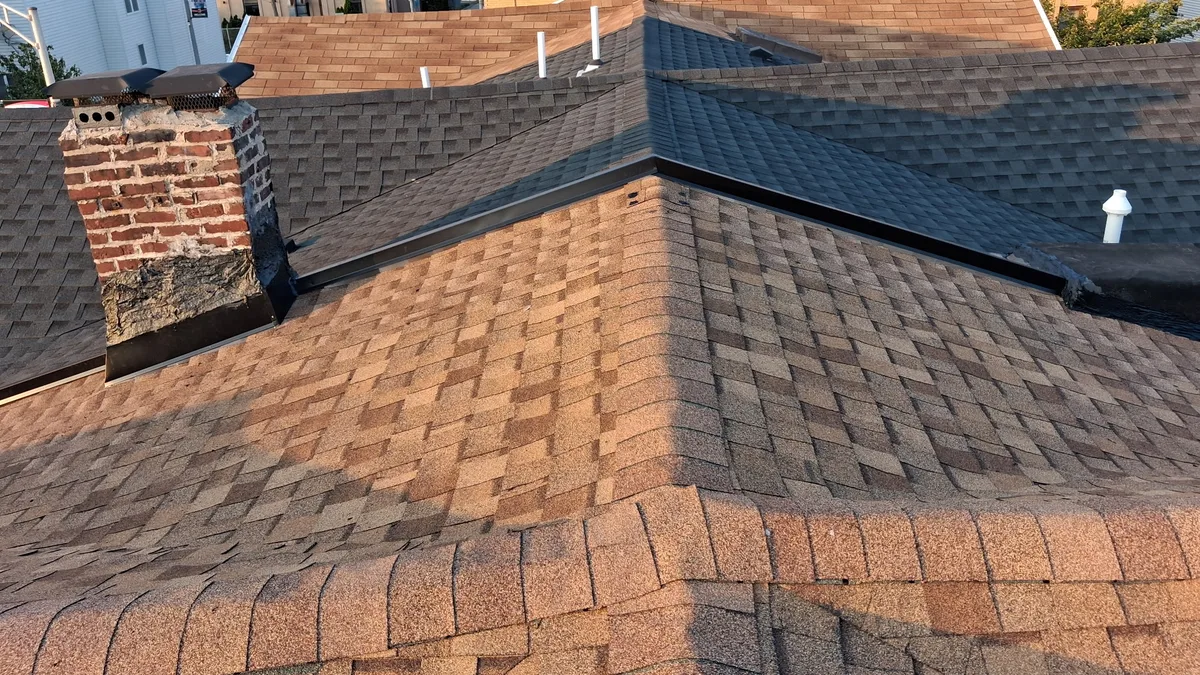
Usually because old flashing was left in place under the new shingles, or a detail at a wall, chimney, skylight or pipe was not done right. Old flashing under new shingles is the most common cause of leaks on a new roof. The shingles are new, but the metal at the joints is not.
When a new roof leaks, these are the details we check:
- Flashing at walls, chimneys and skylights reused from the old roof, or sealed with caulk instead of replaced
- Pipe boots, which should be new along with the shingles
- Valleys and the areas around chimneys, skylights and pipes, where ice and water barrier belongs under the shingles
On a ProTech roof replacement, new flashing goes in at walls, chimneys and pipes, because we do not reuse worn-out flashing. If your new roof is leaking, ask us for a free inspection, and the photos will show where the water gets in.
Roofer did not fix the leak? How we find the real source
We follow the water from the inside back to where it enters, then check the roof above it. If there is an attic we can get into, we start there, because the underside of the roof shows the path the water took.
- On the roof, we look at the flashing, nail pops, shingle condition and anything that comes through the roof.
- When the source is not plain to see, we use an infrared scan to find hidden moisture, or run a hose on one suspect spot at a time, with someone below watching for the first drip.
- We photograph the entry point, so you can see what failed.
- On a roof with two or three layers, we strip the section to the deck, find where the wet track starts and rebuild it as one layer.
Tell us where the stain is, which storms bring it, which way the wind was blowing and what the first repair was. Any photos you have will help. Please stay off the roof yourself.
What to ask for after a roof repair: photos of the problem and the fix
Ask for photos of the spot where water was getting in, photos of the finished repair, and a written note of what was done. With those, you know the repair was made at the source.
- The cause, photographed. The failed flashing, cracked pipe boot or lifted shingles, not only the ceiling stain.
- The finished repair, photographed. New flashing, a new boot or new shingles in place.
- What was used. New metal and matching shingles, or sealant only.
- What else was found. Other worn flashing or a tired section of roof that may leak next.
On our repairs, you get photos of the problem and of the finished repair. Every permanent repair comes with a minimum 2-year workmanship warranty on the repaired area, in writing, and some repairs get a longer warranty, depending on the age and condition of the roof.

When a roof leak that keeps coming back means a new roof
When leaks show up in more than one area, or the same leak keeps coming back even after it has been repaired at its source. On a roof 20 years old or more with leaks in several places, each repair buys little time, and the money is better spent on a new roof.
One failed spot on a roof that still has years left is usually a repair. So is flashing that failed at a chimney, a skylight or a wall, since new flashing solves it whatever the age of the shingles. If the rest of the roof is close to the end of its life, you hear that from us before you spend money on a repair. Our guide to repairing or replacing a roof goes through the signs. See also roof repair and roof replacement, and if water is coming in now, stay off the roof and see emergency roof repair.
Questions
Repeat roof leaks: common questions
Why does my roof leak keep coming back?
Usually because the repair was made near the stain, not where the water enters. Water runs under the shingles and along the roof boards before it drips, so the real source can be several feet uphill. A sealant-only patch, a second leak or water running between old layers of shingles can also bring it back. We follow the water back, from the attic when we can, and photograph where it gets in.
Why is my new roof leaking?
Most often because old flashing was left under the new shingles, or a wall, chimney, skylight or pipe was caulked instead of flashed. A new roof that leaks only in heavy rain or wind often has flashing that is loose or too short, or a problem in a valley. On our roof replacements, new flashing goes in at walls, chimneys and pipes, and worn-out flashing is never reused.
How do I know a roof repair was done right?
Ask for photos of the spot where water was getting in and of the finished repair, and ask what was used. A lasting repair puts in new flashing, a new pipe boot or matching shingles at the source, not only roof cement or caulk. The real test is the next storm of the same kind that brought the leak. On our repairs, you get photos of the problem and of the finished repair.
What should I tell a roofer about a leak that keeps coming back?
Tell them where the stain is, which storms bring it, which way the wind was blowing and what the first repair was. Photos of the stain help, and so do any photos the first roofer gave you. With that, the search can start at the likely entry points instead of the spot right above the stain. Please stay off the roof yourself.
Does a roof that keeps leaking need to be replaced?
Not always. If one spot keeps leaking because earlier repairs missed the source, a repair made at the real source usually ends it, and failed flashing at chimneys, skylights and walls is replaced whatever the age of the shingles. If a roof 20 or more years old leaks in several places, or the shingles on whole slopes are curling, cracking or bald, a new roof makes more sense.
Roof still leaking after a repair?
If your roof is still leaking after a repair, call us or ask for a free inspection, and we will trace the leak to its source and show you photos of what we find.