
Chimneys
Chimney flashing repair in North Jersey
4.9 stars on Google60+ reviewsFamily-owned12 years of roofing experience
Minimum 2-year workmanship warranty on chimney flashing repairs, in writing
The chimney is the most common place for a roof to leak, and most of the time the metal flashing is the reason. We replace it with new step flashing and counter-flashing cut into the mortar, and build a cricket behind wide chimneys. You get a written price before we start.

Starting price
Full chimney re-flash from $1,200
That is the full job: new step flashing woven into the shingles and counter-flashing cut into the mortar, with the shingles around the chimney replaced. Not a caulk or tar patch. Your price is in writing before any work starts. Rotten wood found under the old shingles is priced separately, and we show you photos first.
Flashing
How chimney flashing is supposed to work
A chimney and a roof move separately. Flashing has to keep water out of the gap between them while letting both move. It does that with two layers of metal:
- Base and step flashing are L-shaped pieces woven into each course of shingles and turned up against the brick.
- Counter-flashing is set into a groove cut into the mortar joint and folds down over the step flashing like a cap.
- A cricket is a small peaked roof built behind a wide chimney to split the water and send it around the sides. The building code calls for one on chimneys more than 30 inches wide.
The most common shortcut we find is flashing that was never cut into the mortar. It is just stuck to the face of the brick with roof cement or caulk. That holds for a few years, then the sealant cracks and the leak starts.
Diagnosis
Signs the flashing has failed
| What we find | What it means | What we do |
|---|---|---|
| Rusted, lifted or tar-covered flashing | The metal has failed or was never installed correctly | New step and counter-flashing, cut into the mortar joints |
| Flashing stuck to the brick with roof cement or caulk | It was never cut into the mortar, and the sealant cracks after a few years | New counter-flashing set into a groove cut into the mortar joint |
| Water staining on the ceiling behind a wide chimney | No cricket, so water and debris pile up against the back | Build a cricket and re-flash |
| A leak only in wind-driven rain | Water is pushed behind loose or short counter-flashing | New counter-flashing that laps well over the step flashing |
How we do it
How we re-flash a chimney
We do not patch chimney flashing with more cement. We take the old metal off and replace it the way flashing is supposed to work:
- Remove the old flashing and any roof cement or caulk around the chimney
- Weave new step flashing into each course of shingles, turned up against the brick
- Cut a groove into the mortar joint and set new counter-flashing into it
- Build a cricket behind wide chimneys, where the code calls for one
- Check the finished work, take photos and put the minimum 2-year workmanship warranty in writing
Re-flashing the chimney is also part of every roof replacement we do, because old flashing under new shingles is the most common cause of leaks on a new roof.
On chimneys covered in siding, we also replace rusted metal chase covers.
Our work
Chimney flashing from our jobs
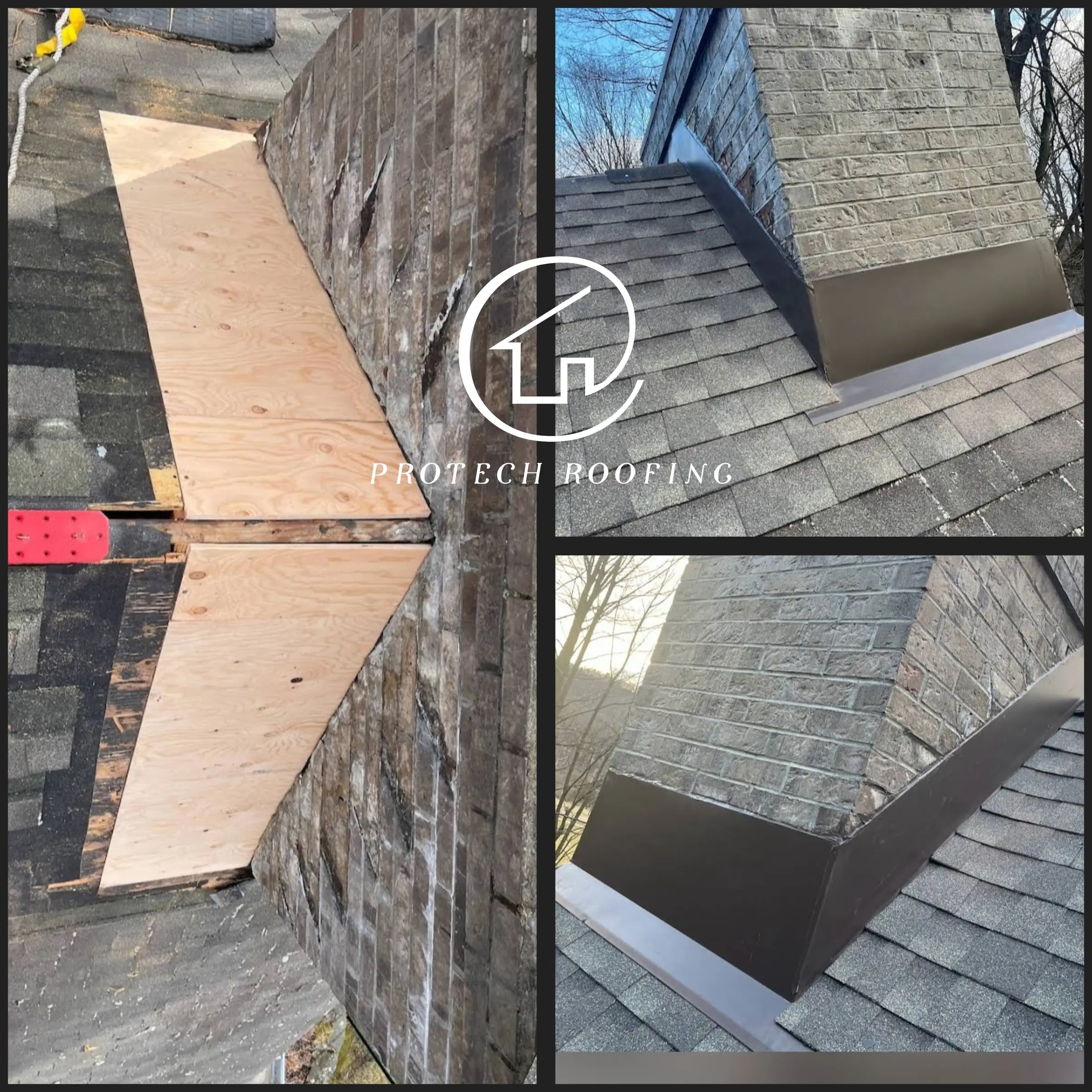
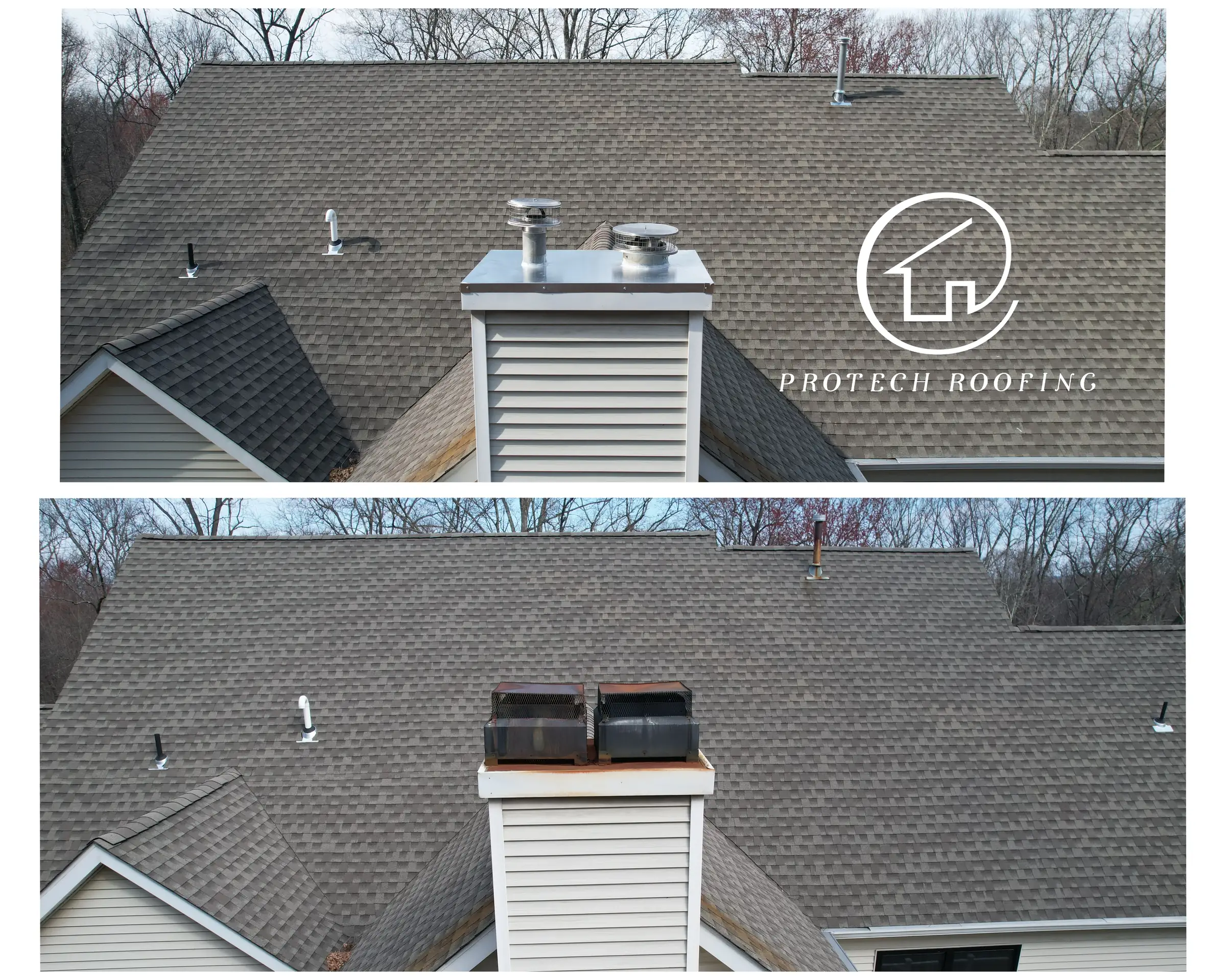
New flashing, new roof decking beside a chimney and a new chase cover. Click or tap any set to see it full size.
 View this photo set full size (opens in a new tab)
Before: old flashing buried in roof cement. After: new metal flashing and a cricket behind the chimney to split the water. 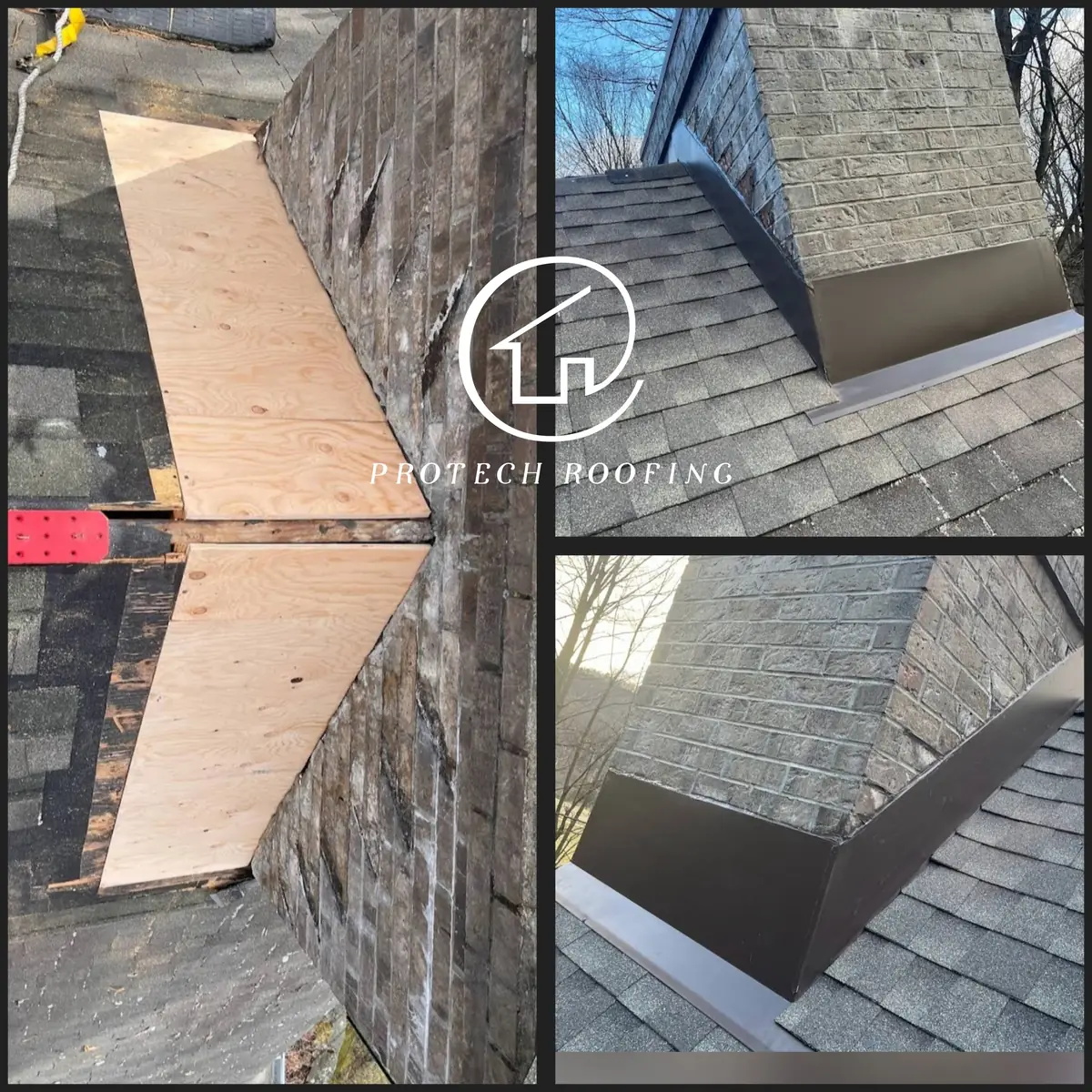 View this photo set full size (opens in a new tab)
Damaged decking beside the chimney replaced with new plywood, then new dark bronze flashing around the base. 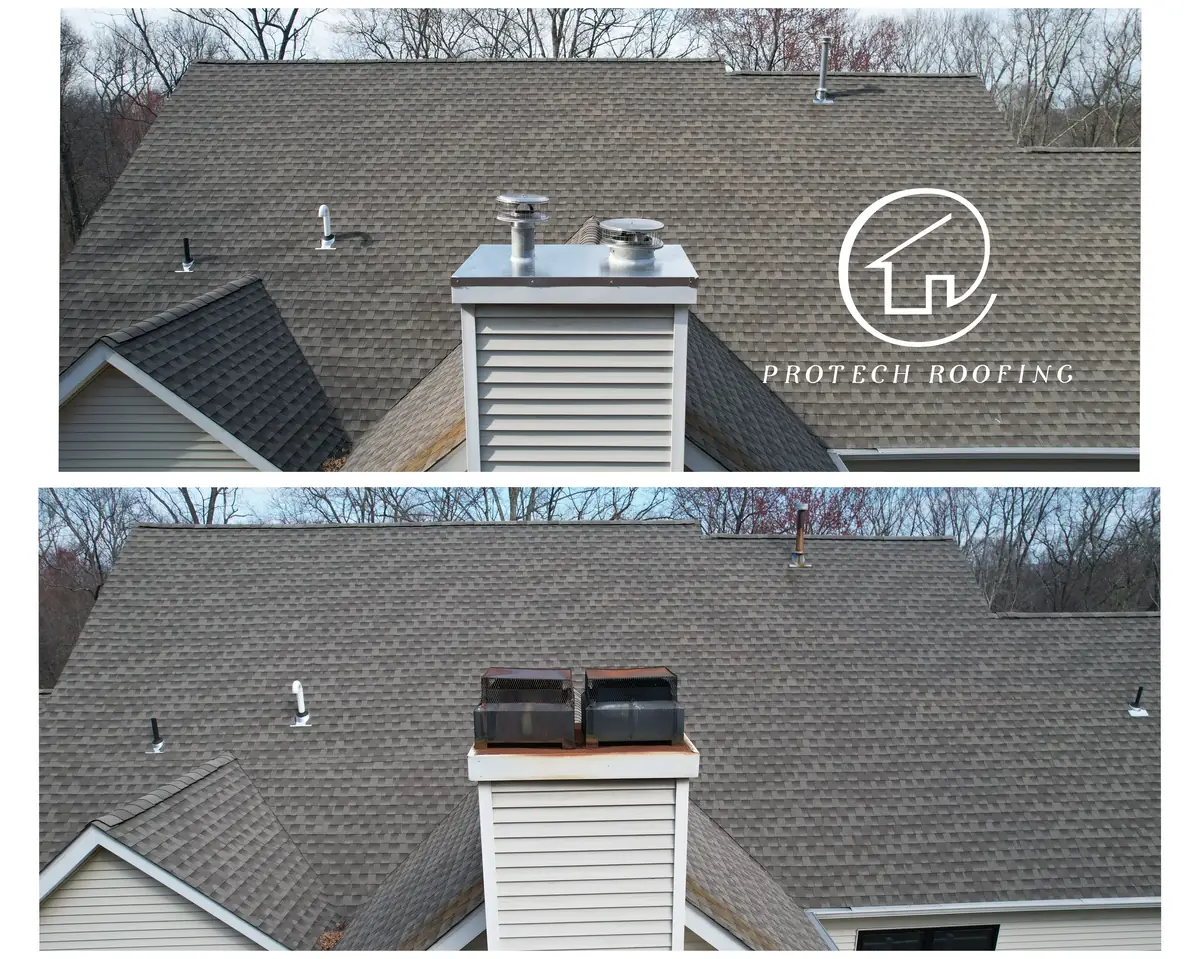 View this photo set full size (opens in a new tab)
Before (bottom photo): a rusted chase cover. After (top photo): the new metal chase cover.

Reviews
What customers say about our repairs
These reviews are about our roof repairs in general. Copied word for word from Google, where we cannot change a word.
“Did an excellent job with roof repairs and ice removal. Approximate time and care was given to the task, which was great to see.”
— Mitch M., Google review “ProTech Roofing provided a diagnosis and plan to repair a leak in my roof at a reasonable price and in the time frame I required. Ervin and his team worked quickly and efficiently to repair the leak on schedule. It rained heavily a day after the job was completed and there was no leak, demonstrating Ervin’s diagnosis and repair were correct and effective. I have no hesitation in recommending ProTech to anyone needing a new roof or a repair to an existing roof.”
— Ed L., Google review
Questions
Chimney questions
Why does my chimney only leak in some storms?
Wind direction. A driving rain from one side pushes water behind loose or short flashing, while a gentle rain from another direction does not. Leaks that depend on the wind usually point to the counter-flashing.
Can you just re-caulk the flashing?
We can, but we will tell you it is temporary. Sealant on its own lasts a year or two in our sun and freeze-thaw cycles. Flashing that is cut into the mortar joint does not depend on caulk to stay dry.
What metal do you use for chimney flashing?
Aluminum and coated steel are the standard on shingle roofs. On slate roofs and long-life installations we use copper, because the flashing should last as long as the roof around it.
Should the chimney be re-flashed when I get a new roof?
Yes. Old flashing under new shingles is the most common cause of leaks on a new roof. We include new chimney flashing in our roof replacement scope.
What is a chimney cricket and do I need one?
A cricket is a small peaked roof built behind a wide chimney to split the water and send it around the sides. The building code calls for one on chimneys more than 30 inches wide. Without it, water and ice pile up against the back of the chimney and the flashing there is the first thing to fail. We build the cricket when we re-flash.
How often should chimney flashing be inspected?
Have it looked at whenever the roof is inspected, after any storm that moves shingles, and any time a stain appears on a ceiling or wall near the chimney. Flashing that is cut into the mortar joint does not depend on caulk to stay dry. Flashing that was only stuck to the face of the brick with roof cement or caulk holds for a few years, then the sealant cracks and the leak starts.
Related services
Leak near the chimney?
We will find where the water gets in, show you the photos and give you a written price.