
Commercial roof replacement
Commercial roof replacement in North Jersey
4.9 stars on Google60+ reviewsFamily-owned12 years of roofing experience
When patching stops working, a new roof system fixes the leaks and also the drainage, insulation and edge details that caused them. We give you a clear scope, a real schedule and a building that stays open during the work.
- Registered & insured NJ HIC Reg. #13VH12667100
- Family-owned in North Jersey
- Free written estimates, no obligation
Your options
Recover or tear off?
| Approach | What it means | When it fits |
|---|---|---|
| Recover | A new membrane, usually over a cover board, installed on top of the existing roof. | One existing roof, dry insulation, sound deck. Lower cost and less disruption. |
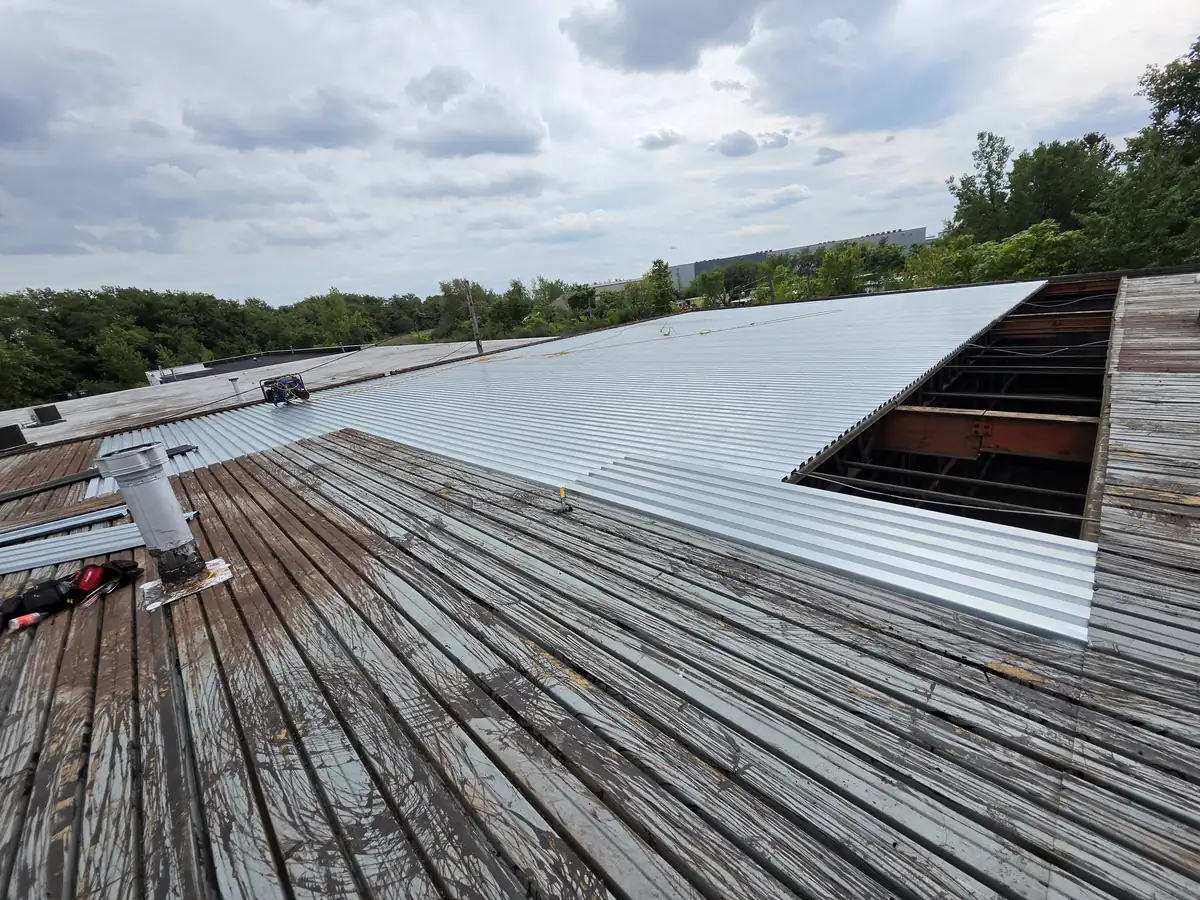
| Tear-off and replace | Everything comes off to the deck. New insulation, cover board and membrane. | Wet insulation, two existing roofs, deck damage or drainage that must be re-sloped. |
| Partial tear-off | Wet areas are cut out and replaced, then the whole roof is recovered. | Moisture is limited to defined areas confirmed by testing. |
Building codes limit a building to two roof coverings and do not allow a recover over water-soaked materials.
Scope
What a new commercial roof includes
- Moisture survey and core cuts so the scope is based on facts
- Deck repair or replacement where needed
- Polyiso insulation to meet the energy code, with tapered insulation to move water to the drains
- A cover board under the membrane on most projects
- Your choice of membrane: TPO, PVC, EPDM or modified bitumen
- New flashing at every curb, pipe, wall and drain
- New edge metal and coping
- Walk pads at rooftop units and service paths
- Permits, inspections and close-out photos
Choosing a system
Which membrane should go on your building?
We install membranes from Carlisle, Elevate (formerly Firestone Building Products), GAF, Mule-Hide and Versico, among others. Your proposal names the manufacturer, product, thickness and warranty.
- TPO for most retail, office and warehouse roofs. White, welded seams, good value.
- PVC where kitchen exhaust, oils or chemicals reach the roof.
- EPDM for a proven, flexible system, especially on smaller and mid-size roofs.
- Modified bitumen for small roofs, heavy foot traffic and tie-ins to existing asphalt roofs.
We price more than one option when it makes sense, so you can weigh cost against service life.
Recent work
A commercial roof replacement, start to finish
A new rooftop addition on a commercial building: cover board fastened over the insulation, TPO membrane welded in place, and the finished white roof from above.
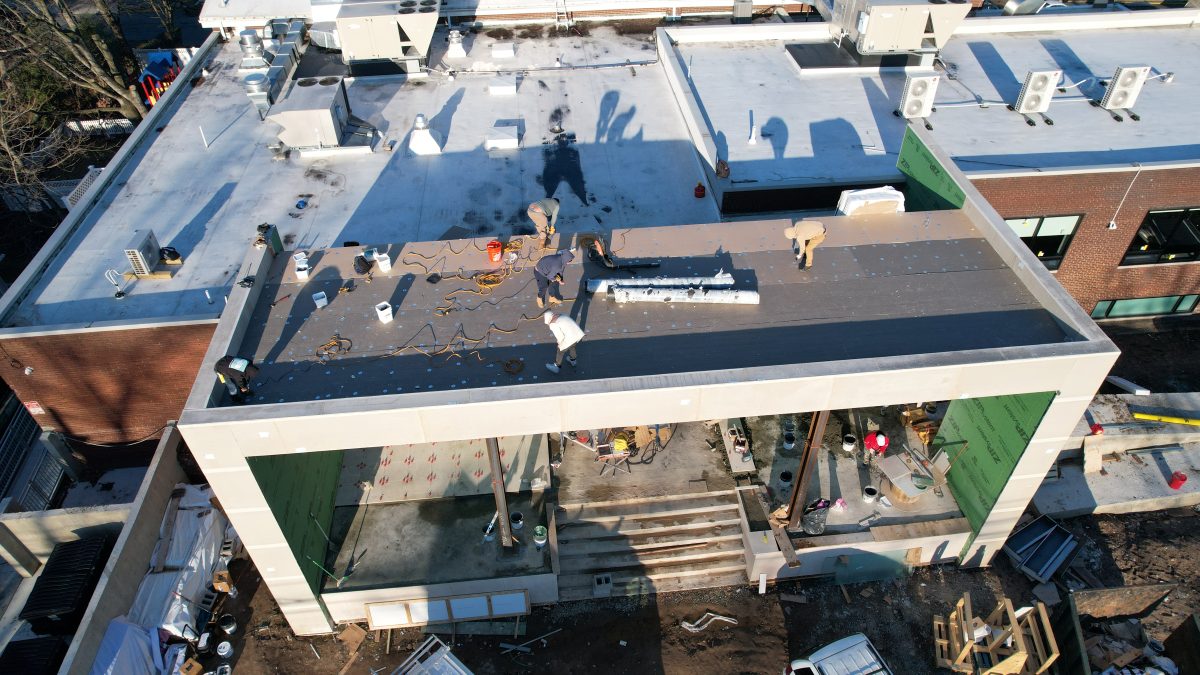
Cover board fastened over the insulation, ready for membrane. 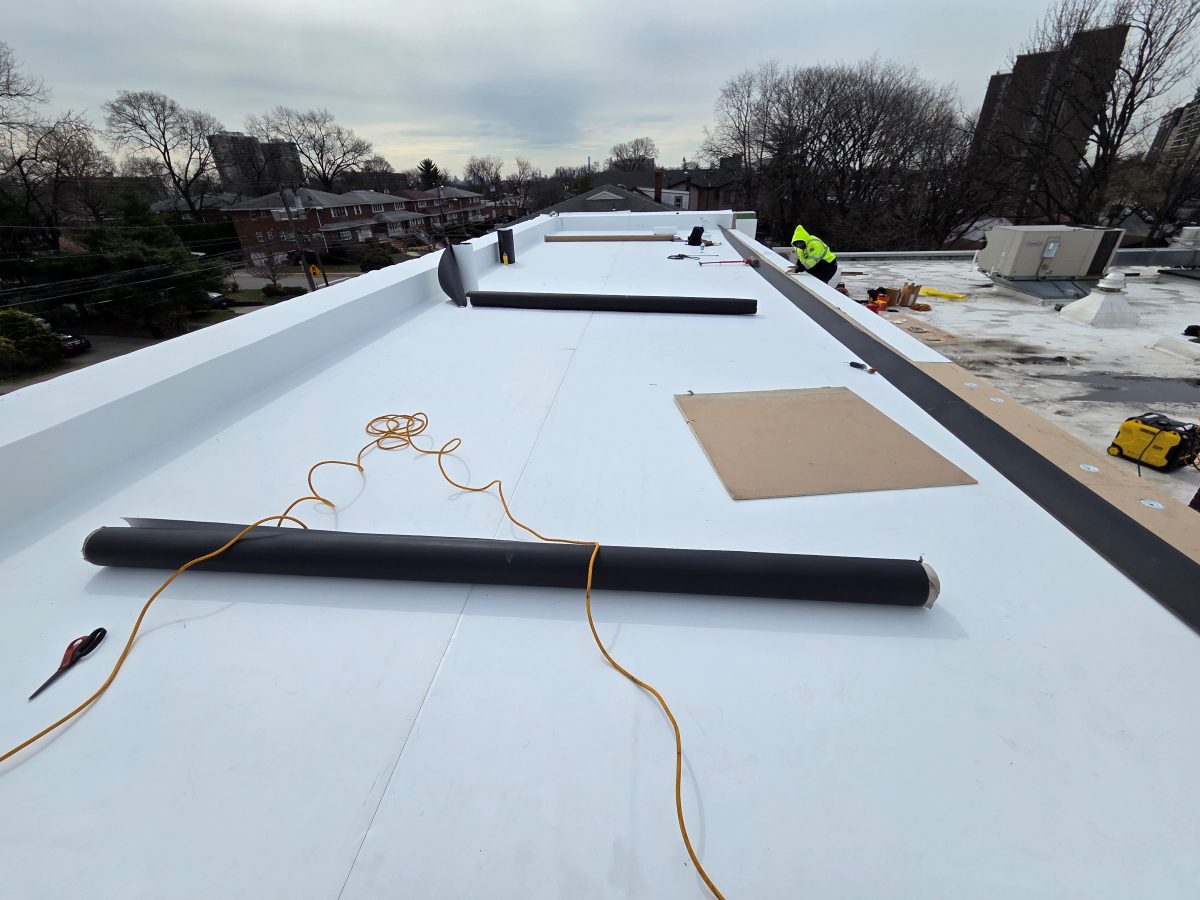
TPO membrane going down sheet by sheet, every seam heat-welded. 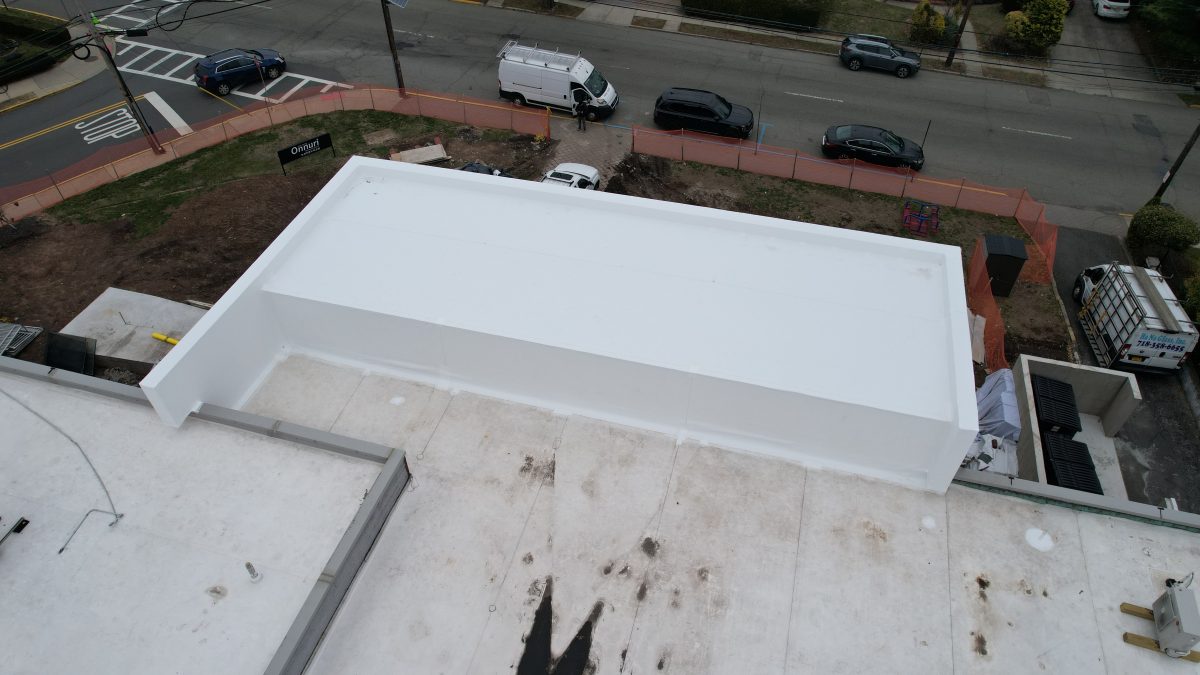
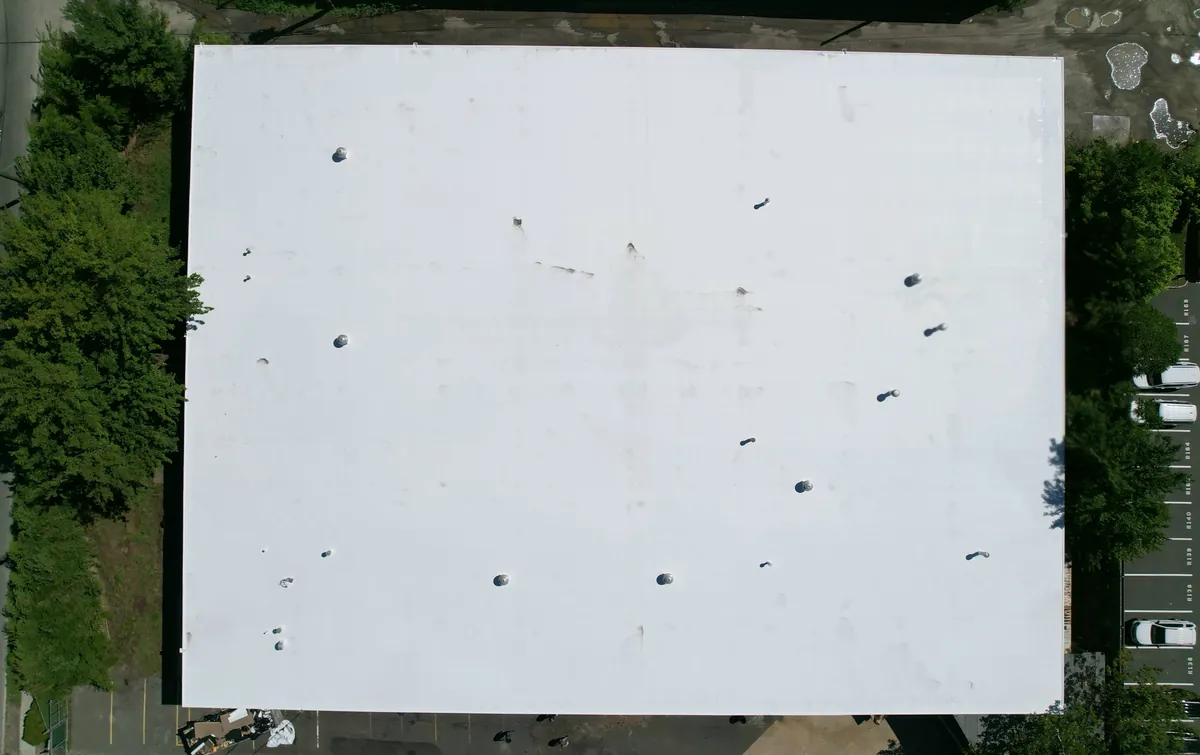
Finished: a bright, reflective TPO roof with the parapets wrapped in the same membrane.
Questions
Commercial roof replacement questions
How long does a commercial roof replacement take?
It depends on the size of the roof and how much has to come off. Weather, deck repairs and rooftop equipment all affect the schedule. Your proposal includes a timeline.
What affects the price?
Size, the number of existing layers, how much insulation is wet, the insulation thickness required, the number of penetrations and rooftop units, roof access, membrane type and thickness, and the warranty level you want.
Will the building stay watertight during the job?
Yes. We only open up as much roof as we can close the same day, and we tie new work into old at the end of every shift.
Can a new roof lower energy costs?
Often, yes. Older roofs have far less insulation than today’s code calls for, and a white membrane reflects summer sun. The savings depend on the building and how it is heated and cooled.
Related services
Planning a roof replacement this year?
Get a photo report, options and a written proposal for your budget meeting.