
Residential roofing
Residential roofing in North Jersey
4.9 stars on Google60+ reviewsFamily-owned12 years of roofing experience
Your roof has one job, and you should not have to think about it. We inspect, repair and replace roofs on Cape Cods, colonials, split-levels, Tudors and everything in between, and we explain what we find in plain English.
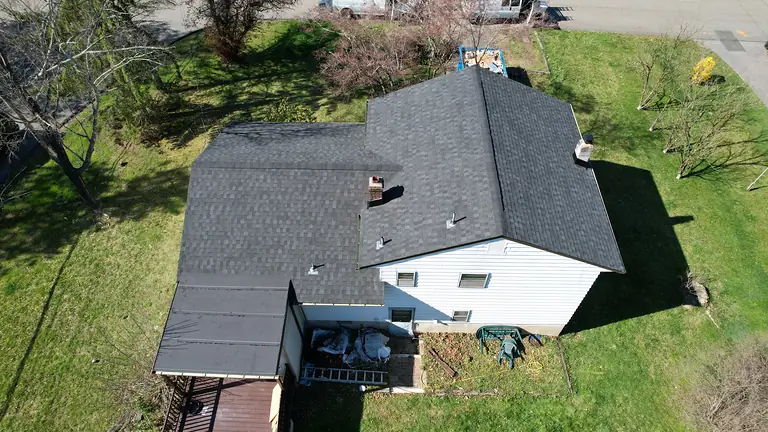
For homeowners
What we do for North Jersey homes
-
Roof Replacement
When the roof is worn out, we tear it off to the deck and build a full new system.
-
Roof Repair
When the roof still has life in it, we fix the leak and leave the rest alone.
-
Emergency Roof Repair
Water coming in now? We make it watertight, then sort out the permanent repair.
-
Shingle Roofing
Architectural shingles, the right underlayment and proper ventilation.
-
Slate Roofing
Careful repairs that keep a 100-year-old slate roof working.
-
Flat Roofing
Membranes for the low-slope parts of a house where shingles do not belong.
Local homes
We know how North Jersey houses are built
Housing here was built in waves, and each wave has its own roof problems.
- 1920s to 1940s colonials and Tudors often have slate or a second and third layer of shingles over old plank decking. Planks shrink and leave gaps, so new shingles need solid decking under them.
- 1950s and 60s Cape Cods, ranches and split-levels tend to have low attics with little ventilation. Heat and moisture cook shingles from below and feed ice dams in winter.
- Newer and larger homes have complex rooflines with many valleys, dormers, skylights and walls meeting roofs. Every one of those joints needs correct flashing.
We look at the whole system: decking, underlayment, flashing, ventilation and gutters. A roof is only as good as its weakest detail. As one local example, our Bergen County roof repair page shows which of these details tend to fail on the houses there.

Warning signs
Signs your roof needs attention
You can spot most of these from the ground or the attic. If you see one, it is worth a free inspection.
- Water stains on a ceiling or down a wall, even if they dried up
- Shingles that are curled, cracked, missing or bald where the granules have worn off
- Piles of granules in the gutters or at the bottom of downspouts
- Dark streaks, moss or algae, common on shaded roofs under trees
- Rusted or lifted flashing around the chimney, skylights or walls
- Daylight showing through the roof boards in the attic
- A roof that is 20 years old or more, or whose age you do not know
Our process
How a residential roofing job goes
Inspection
We check the roof surface, flashing, vents, gutters and attic, and take photos of what we find.
Straight answer
Repair or replace? We show you the photos and tell you what we would do if it were our house.
Written estimate
Scope, materials by name and price, in writing. No obligation.
The work
We protect plants, siding and driveways, then do the job to the manufacturer’s instructions.
Clean-up
Debris hauled away, magnet run for nails, final walkthrough and finished photos.
Our work
Roofs, skylights, chimneys and trim, job by job
A few jobs by our crew. Click or tap any set to see it full size.
 View this photo set full size (opens in a new tab)
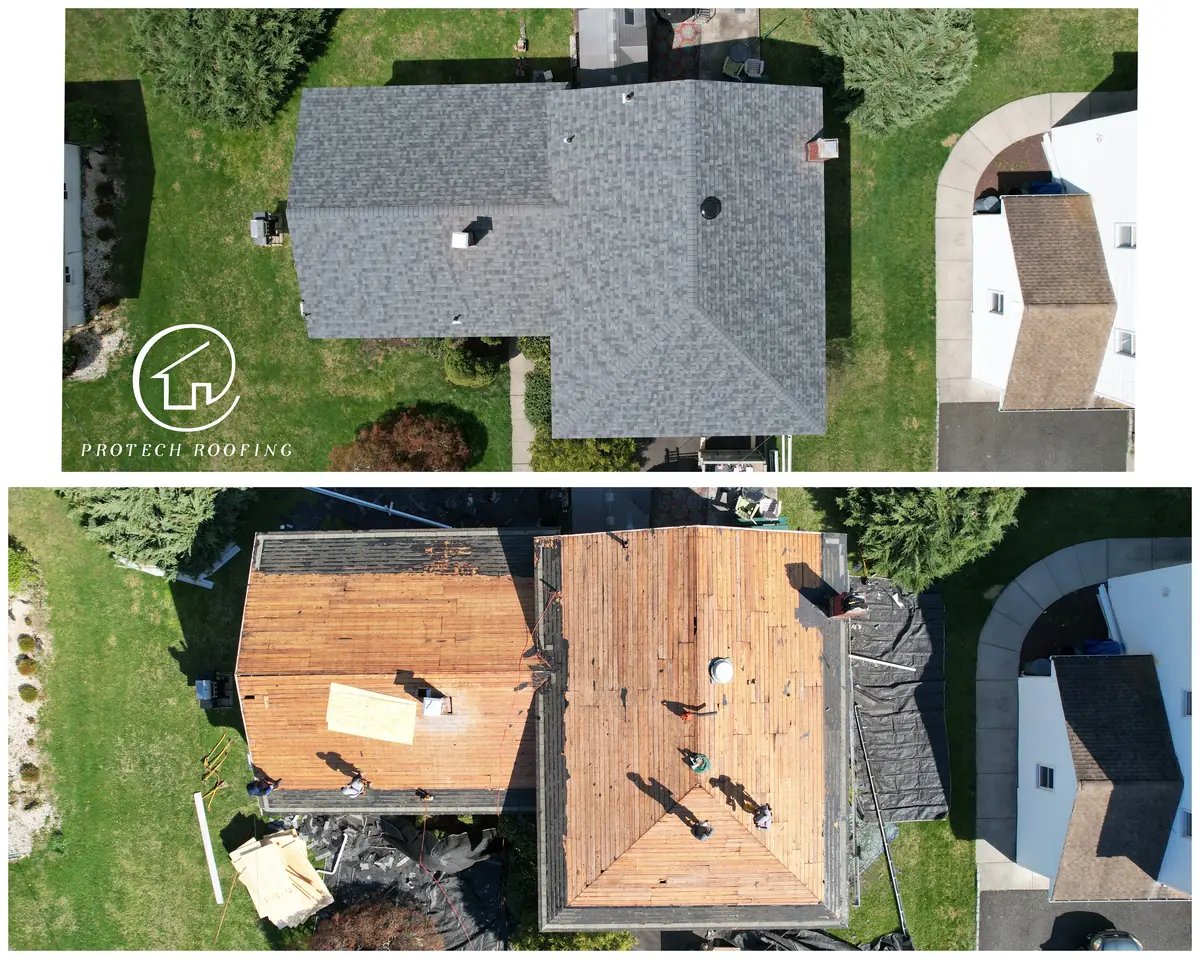
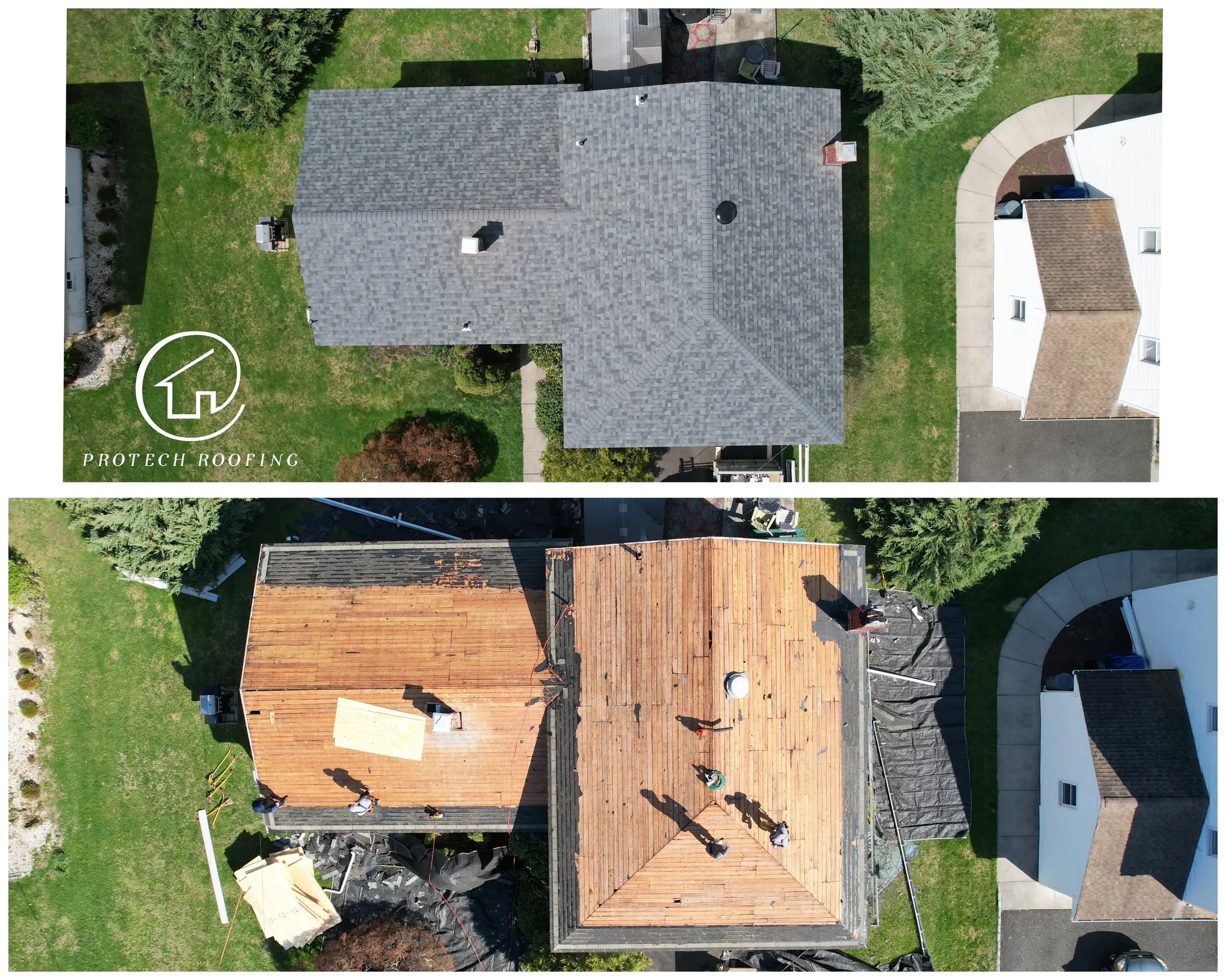
Stripped to the original plank deck with the crew at work, then the finished gray architectural shingles. 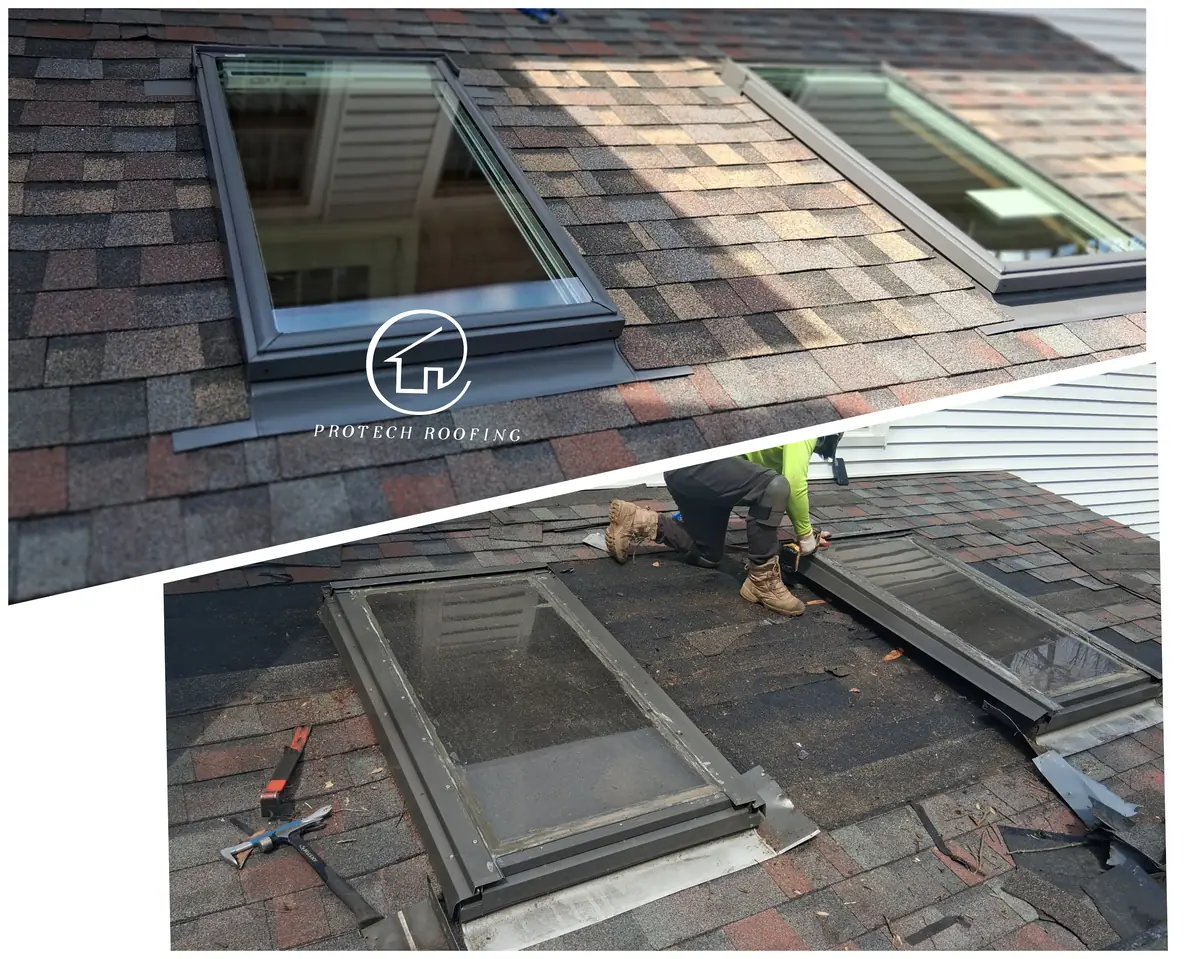 View this photo set full size (opens in a new tab)
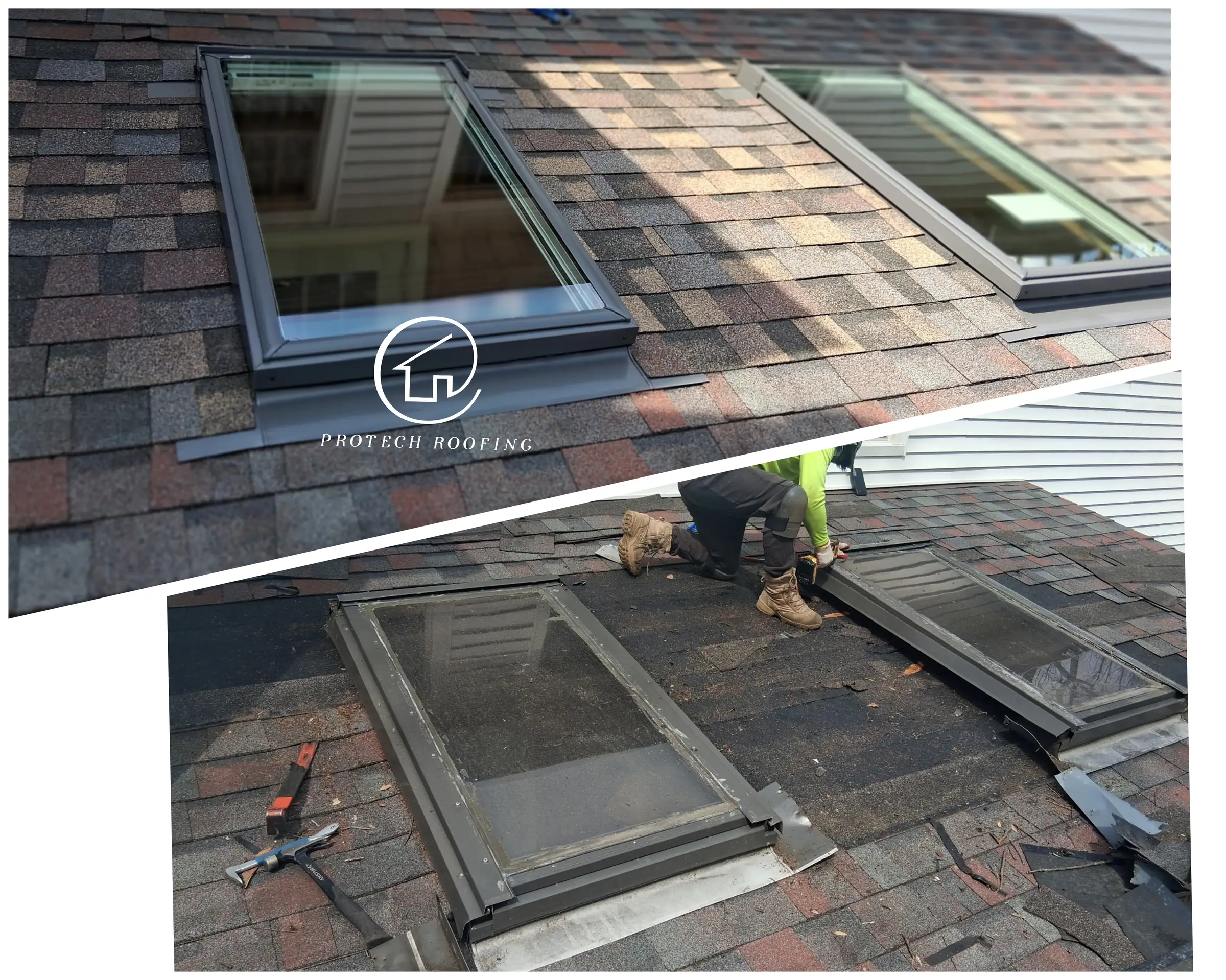
Bottom photo: two worn-out skylights coming out. Top photo: the new units in, with new flashing kits.  View this photo set full size (opens in a new tab)
Before: old flashing buried in roof cement. After: new metal flashing and a cricket behind the chimney to split the water. 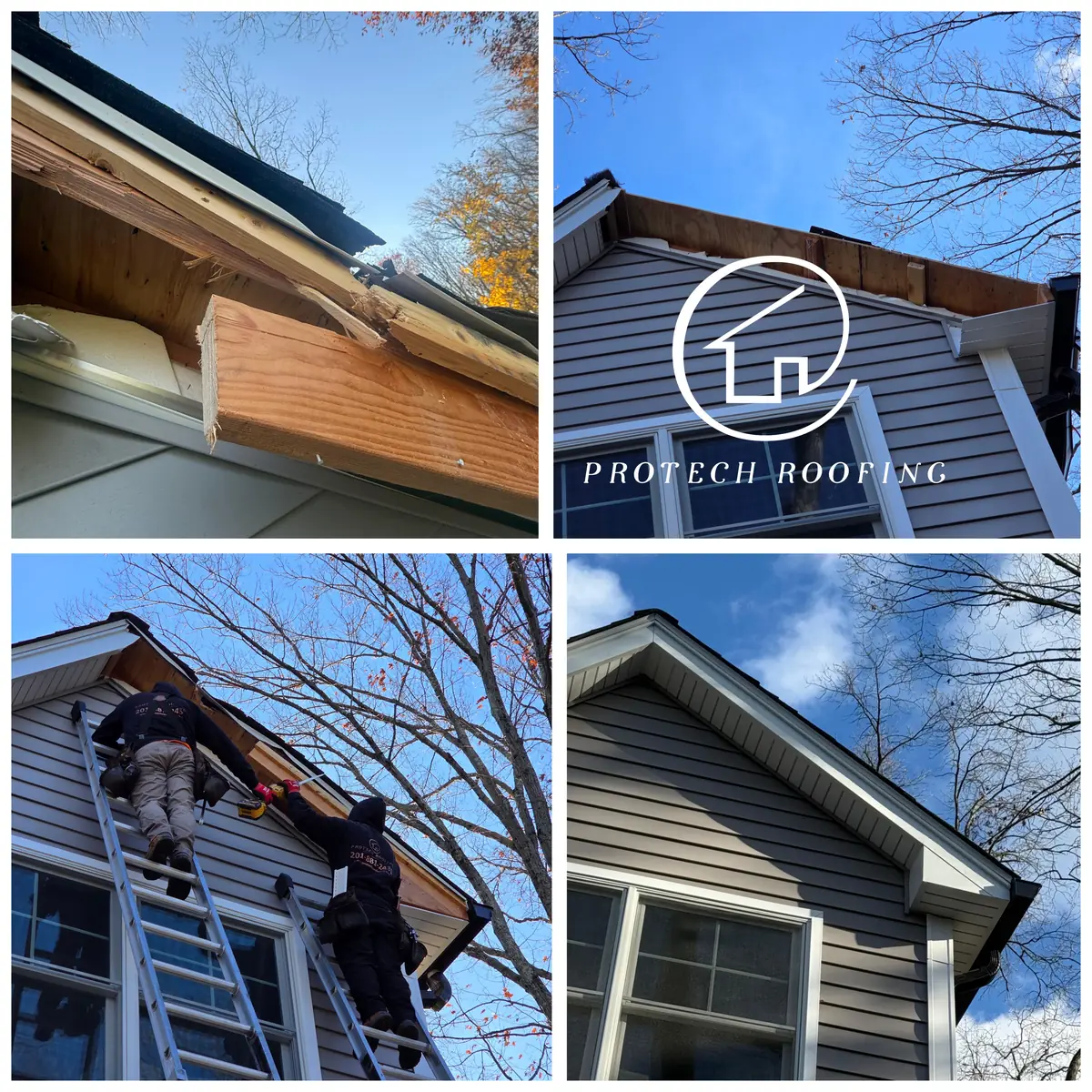 View this photo set full size (opens in a new tab)
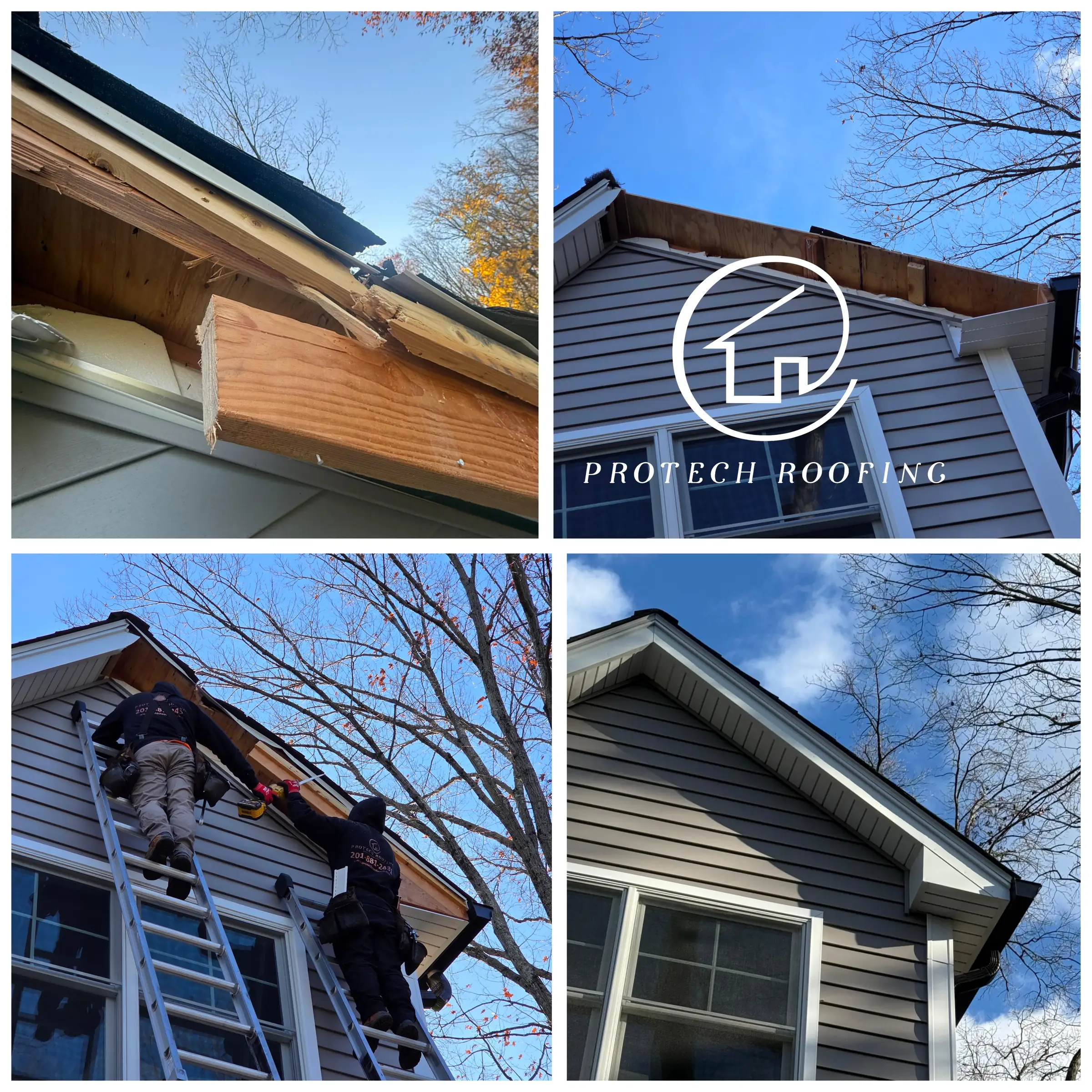
A broken rake board (the trim board along the sloped edge of the roof), cut out, rebuilt and wrapped in new trim to match the house.

Questions
Residential roofing questions
How long does an asphalt shingle roof last in New Jersey?
Most architectural shingle roofs here last about 20 to 30 years. Attic ventilation, tree cover, the quality of the installation and how many winters of ice the roof has seen all move that number up or down.
Can you put new shingles over my old ones?
Sometimes the code allows it, but we do not recommend it. A second layer hides rotted decking, adds weight, traps heat and shortens the life of the new shingles. New Jersey’s rehabilitation code also requires a tear-off when a roof already has two layers or the existing roof is water-soaked. We tear off to the deck so we can see and fix what is underneath.
Will my homeowner's insurance pay for the roof?
Insurance generally covers sudden damage from a storm or a fallen tree, not wear from age. If a storm damaged your roof, we document it with photos and a written scope you can give to your adjuster. Your policy and your insurer decide what is covered.
What time of year can you replace a roof?
We install roofs most of the year. Shingles seal best in warm weather, so in cold months we take extra steps, such as hand-sealing where the manufacturer calls for it. Emergency repairs happen in any season.
Do I have to be home while you work?
No. We need access to the driveway and an outdoor outlet if one is available. We will call or text you with updates, and we walk the finished job with you when it suits you.
Not sure what your roof needs?
Start with a free inspection. We will show you photos and give you a written estimate.